Design Document
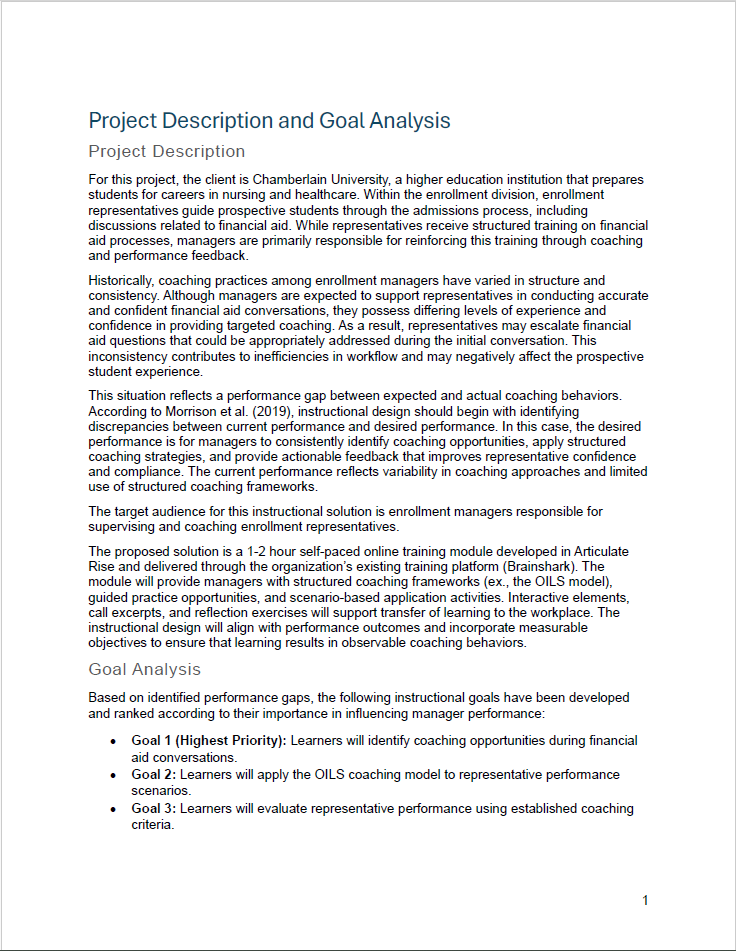
For this capstone project, I was tasked with designing and developing a comprehensive instructional solution that addressed a real-world workplace training need. I chose to create a self-paced coaching module focused on helping Enrollment Managers effectively coach Enrollment Representatives through financial aid conversations.
This portion of the project focused specifically on the instructional design planning process, including learner analysis, needs assessment, instructional sequencing, learning objectives, assessment alignment, and instructional strategy development.
Tools Used
Microsoft Word
Time Spent
About 4 hours
Project Overview
The design document for Coaching Through Financial Aid Conversations served as the foundational blueprint for the development of the instructional module. The document outlined the instructional problem, learner audience, performance gaps, instructional goals, assessment strategy, delivery approach, and implementation considerations that guided the final learning experience.
This phase of the project focused heavily on aligning instructional decisions with both learner needs and organizational goals. Rather than immediately moving into development, I spent significant time analyzing the coaching challenges managers faced during financial aid conversations and identifying the specific behaviors and performance gaps the training needed to address.
Design Process
The design document was structured around several key instructional design components:
Learner and Context Analysis: Analyzed the target learner population, including Enrollment Managers’ existing knowledge, workplace responsibilities, scheduling constraints, and preferred learning approaches. Considered environmental and organizational factors that could influence implementation, engagement, and transfer of learning.
Performance Gap and Needs Assessment: Identified key coaching challenges managers experienced during financial aid conversations, particularly around recognizing coaching opportunities, building representative confidence, and delivering actionable developmental feedback. This process helped define the scope and measurable goals of the instructional solution.
Learning Objectives and Assessment Alignment: Developed measurable learning objectives aligned directly to workplace performance outcomes. Assessments, scenario activities, and knowledge checks were intentionally mapped to each objective to ensure alignment between instruction, practice, and evaluation.
Instructional Sequencing and Strategy: Structured the module using a simple-to-complex instructional progression that moved learners from recognition and understanding to application, evaluation, and creation. Instructional strategies included scenario-based learning, guided practice, reflection activities, modeled examples, and interactive decision-making exercises.
Delivery and Implementation Planning: Planned for asynchronous delivery within the organization’s LMS environment to accommodate varying manager schedules and support scalable implementation. Considered learner accessibility, usability, engagement, and reinforcement strategies throughout the planning process.
Instructional Design Highlights
Developed a detailed instructional design plan grounded in real organizational coaching challenges and authentic workplace performance needs.
Created measurable learning objectives aligned directly to assessments, activities, and workplace application.
Applied instructional design theories and adult learning principles to support engagement, transfer of learning, and practical application.
Designed a progressive instructional sequence that intentionally increased cognitive complexity throughout the module.
Planned scenario-based learning experiences that mirrored realistic coaching conversations and workplace decision-making.
Integrated implementation and evaluation considerations into the design process from the beginning of the project.
Considered learner variability, time constraints, accessibility, and organizational limitations when determining delivery strategies and instructional approaches.
Structured the project using a learner-centered approach focused on performance improvement rather than content delivery alone.
Reflection
This portion of the capstone project significantly strengthened my appreciation for the strategic planning side of instructional design. Prior to this program, I often focused more heavily on development and interactivity, but this project reinforced the importance of conducting thorough analysis and instructional planning before beginning course creation.
One of the most valuable aspects of creating the design document was intentionally aligning every instructional component to a measurable performance outcome. This process helped ensure that each activity, assessment, and interaction served a clear instructional purpose rather than existing solely for engagement.
The design document also reinforced how important flexibility and organizational context are within instructional design. Because the training was intended for busy managers working within a fast-paced enrollment environment, the instructional strategy and delivery approach needed to balance learner engagement with practical time constraints and workplace applicability.
Ultimately, this phase of the project strengthened my ability to think more strategically about instructional design decisions, implementation planning, and learner performance outcomes before moving into development. It reinforced the value of intentional planning and demonstrated how strong instructional design begins long before the course itself is built.
See a sample of the completed document below!