Instructional Course: Coaching for Confident & Compliant Financial Aid Conversations
For this capstone project, I was tasked with designing and developing a comprehensive instructional solution that addressed a real-world workplace training need. I chose to create a self-paced coaching module focused on helping Enrollment Managers effectively coach Enrollment Representatives through financial aid conversations. The project emphasized practical application, scenario-based learning, learner engagement, and alignment between instructional design strategy and measurable performance outcomes.
Audience
This was developed for adults in a corporate environment
Tools Used
Articulate Rise, Articulate Storyline, Canva, Camtasia, Brainshark
Time Spent
This was developed over the span of 10 weeks. I spent roughly 2-3 hours per week.
Project Overview
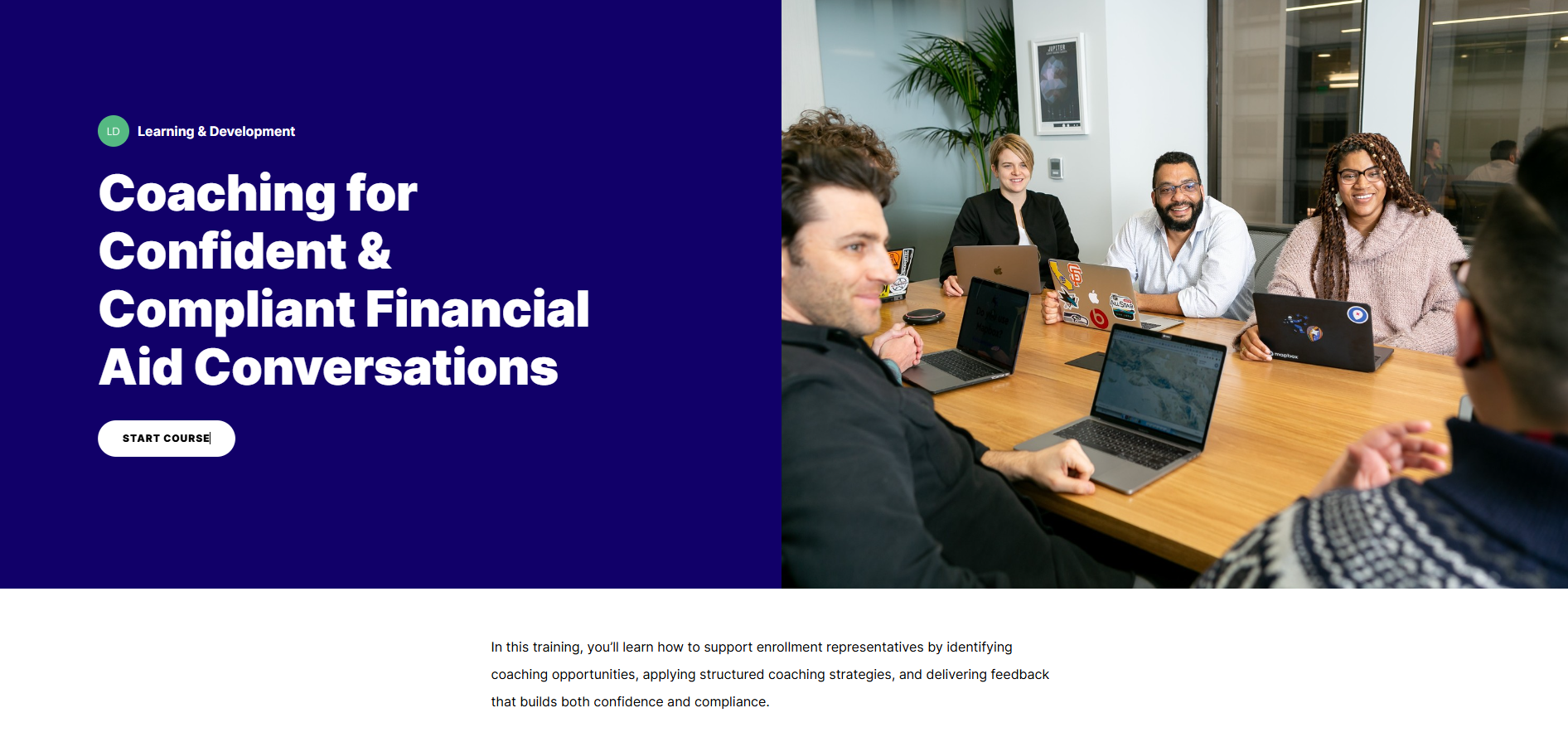
Coaching for Confident & Compliant Financial Aid Conversations is a self-paced e-learning module I designed in Articulate Rise and Storyline to help Enrollment Managers recognize coaching opportunities, apply structured coaching strategies, and deliver effective developmental feedback during financial aid conversations with Enrollment Representatives. The module was developed as part of a larger manager upskilling initiative and focuses heavily on real-world application, practical coaching tools, and learner-centered design.
Design Process
I structured the module around four progressive learning sections:
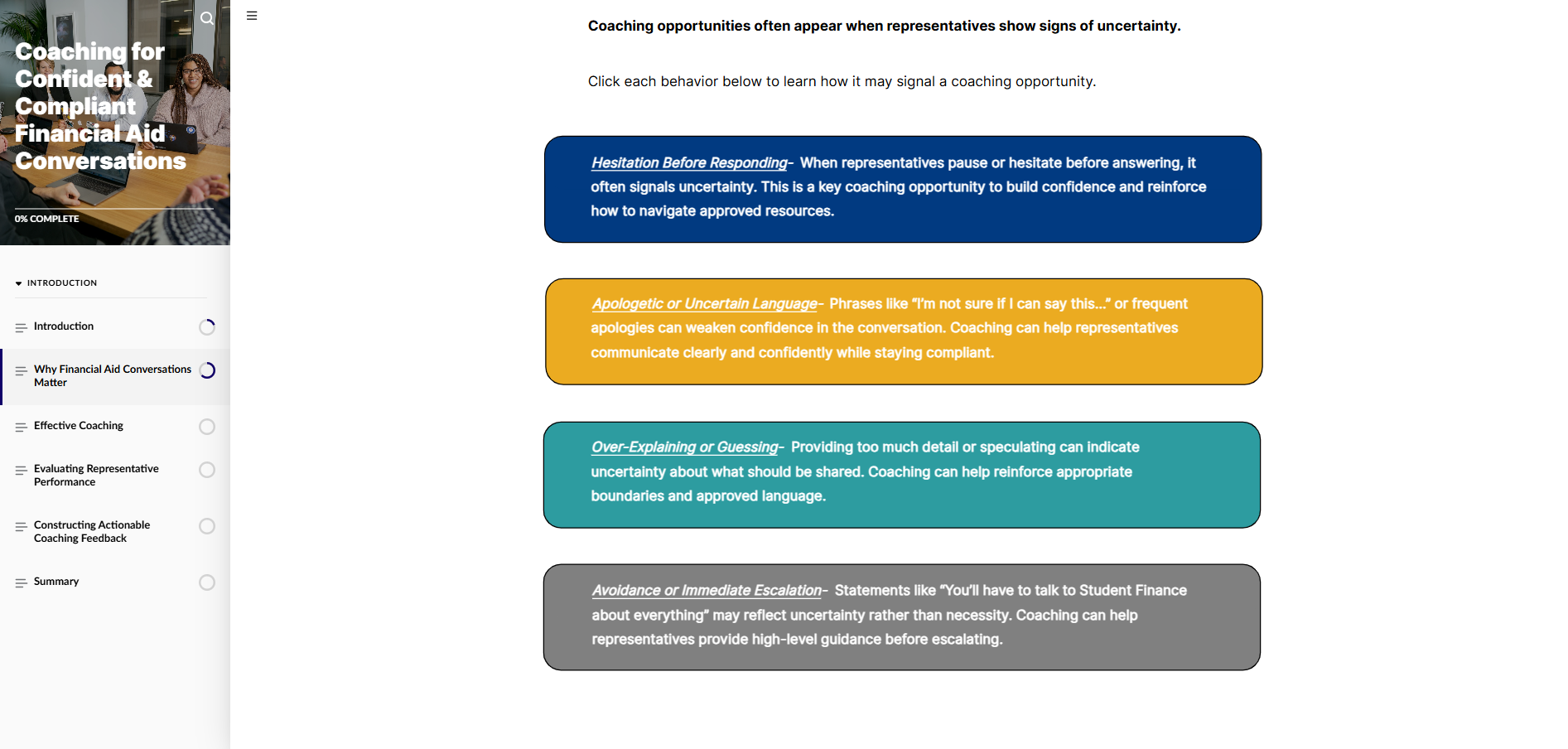
Recognizing Coaching Opportunities: Introduces learners to common indicators that signal when coaching may be needed during financial aid conversations. Learners explore representative behaviors, identify coaching opportunities through guided activities, and practice recognizing moments where manager intervention can improve confidence, communication, and learner support.
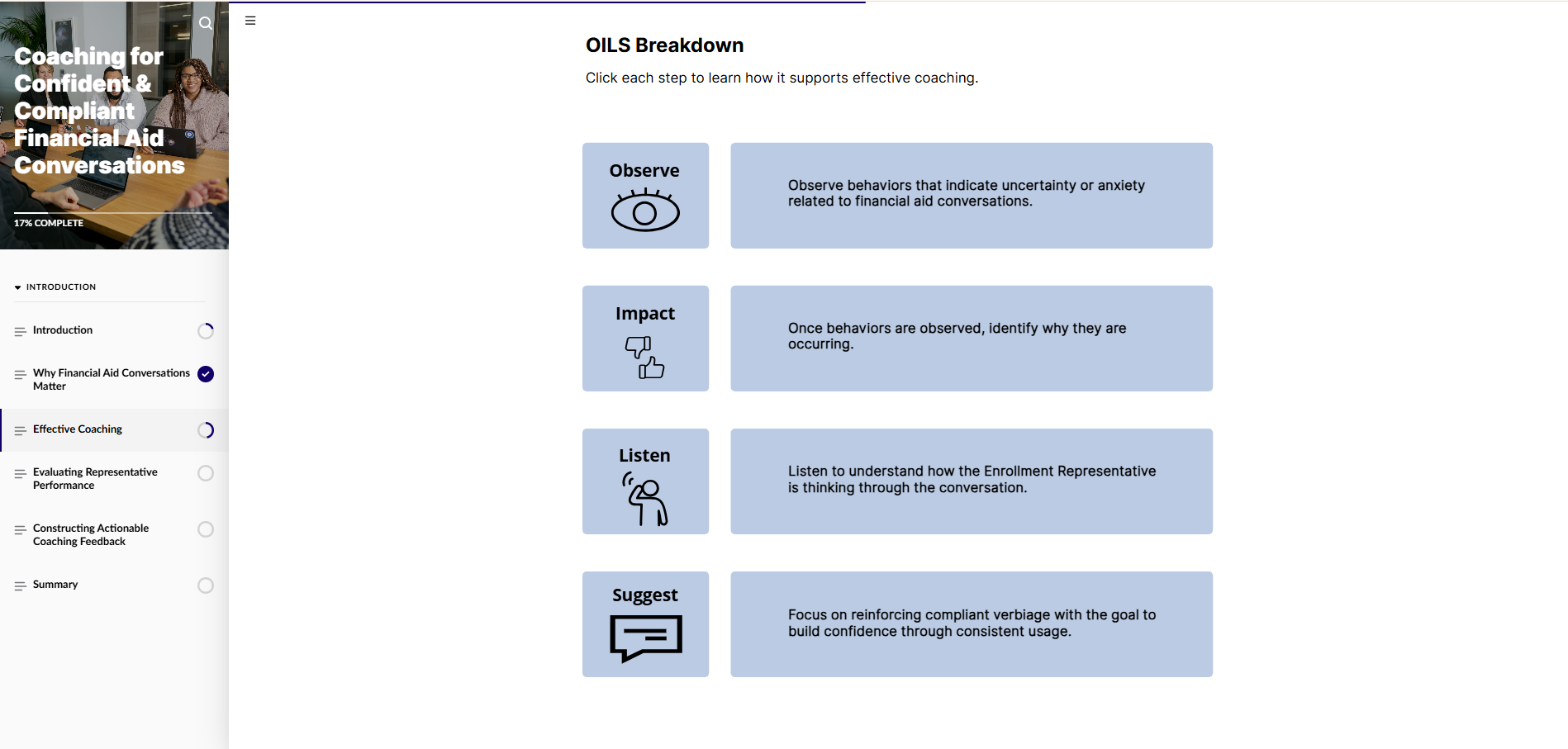
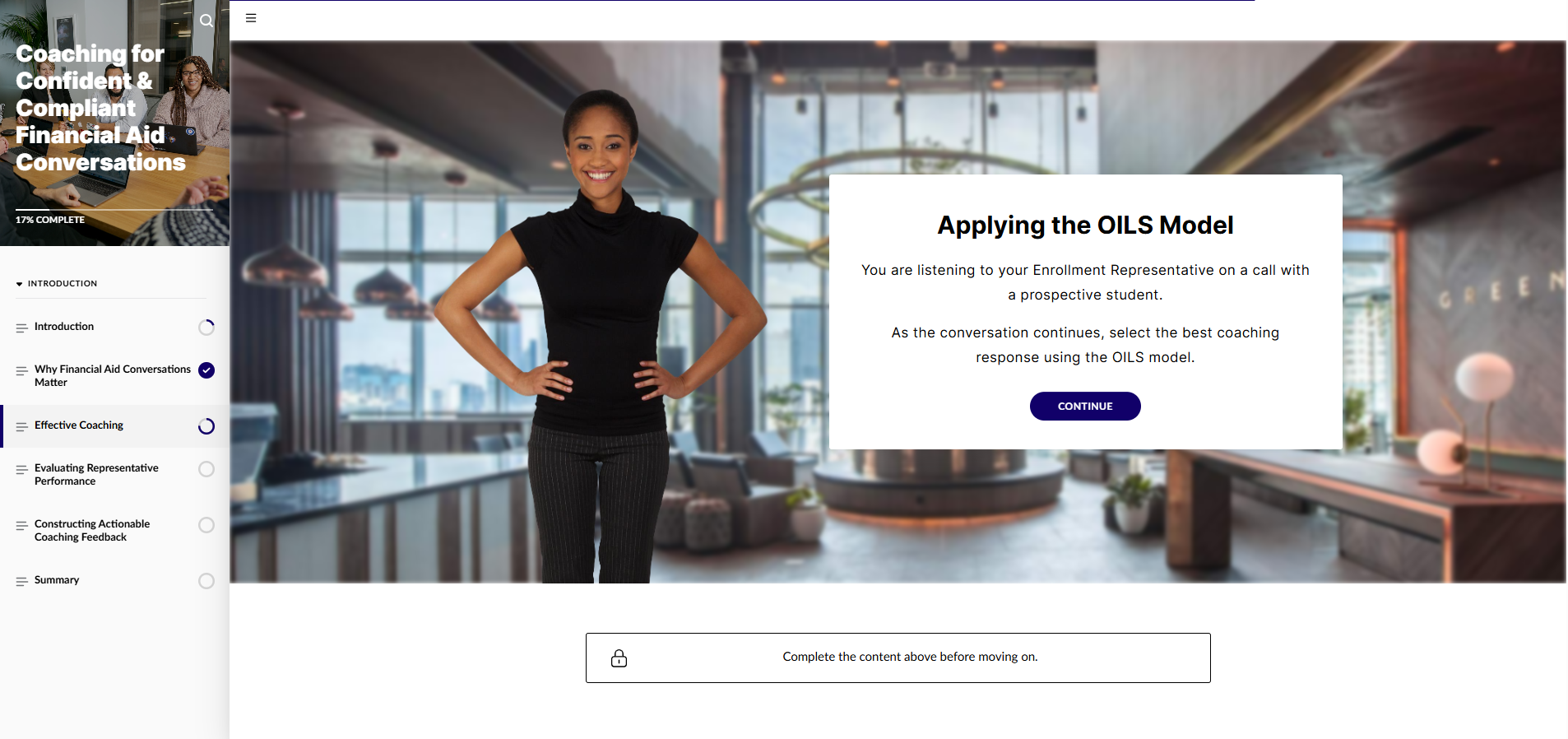
Applying the OILS Coaching Model: Introduces the OILS coaching framework (Observe, Impact, Listen, Suggest) through guided instruction, practical examples, and interactive practice activities. Learners analyze coaching conversations and begin applying structured coaching techniques to realistic workplace situations.
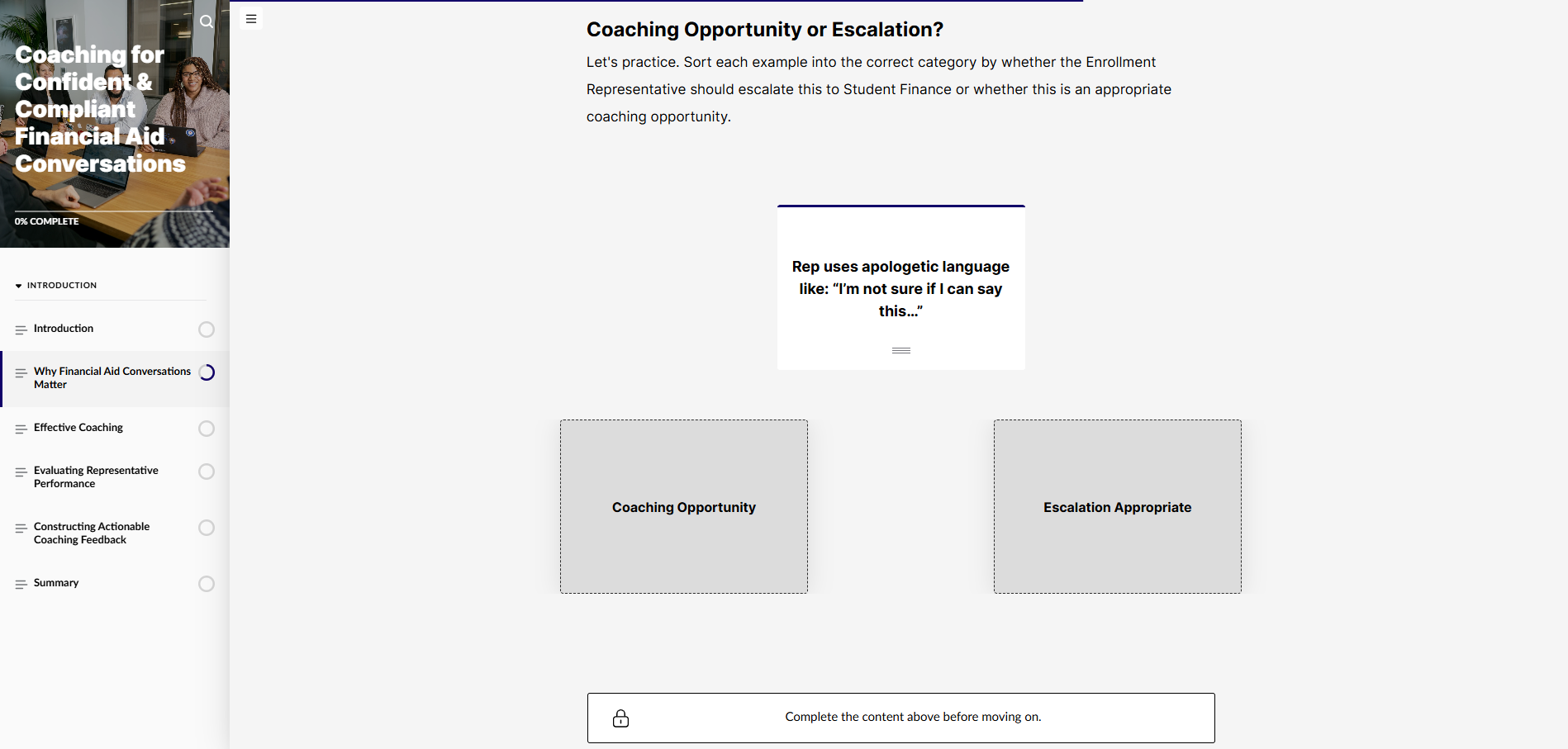
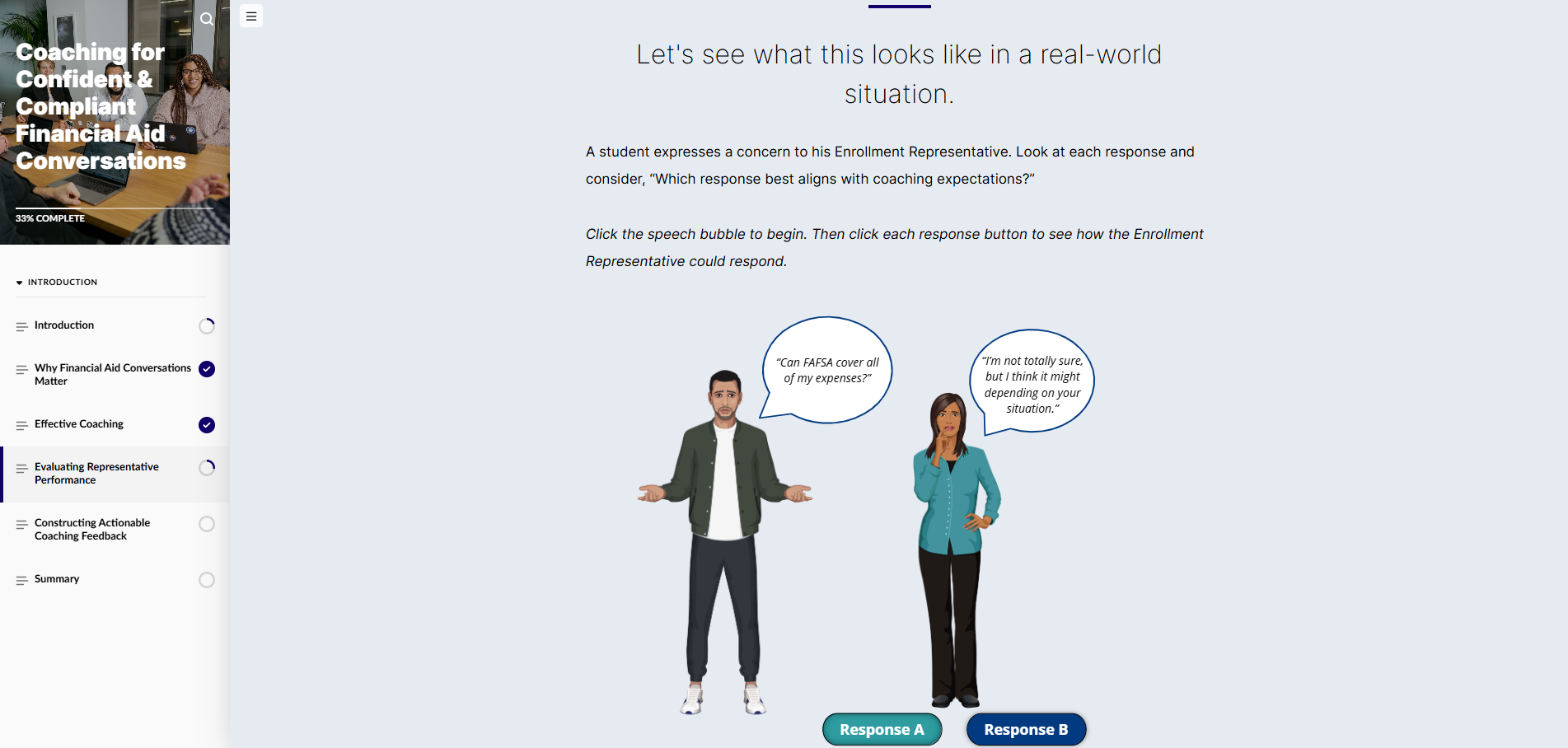
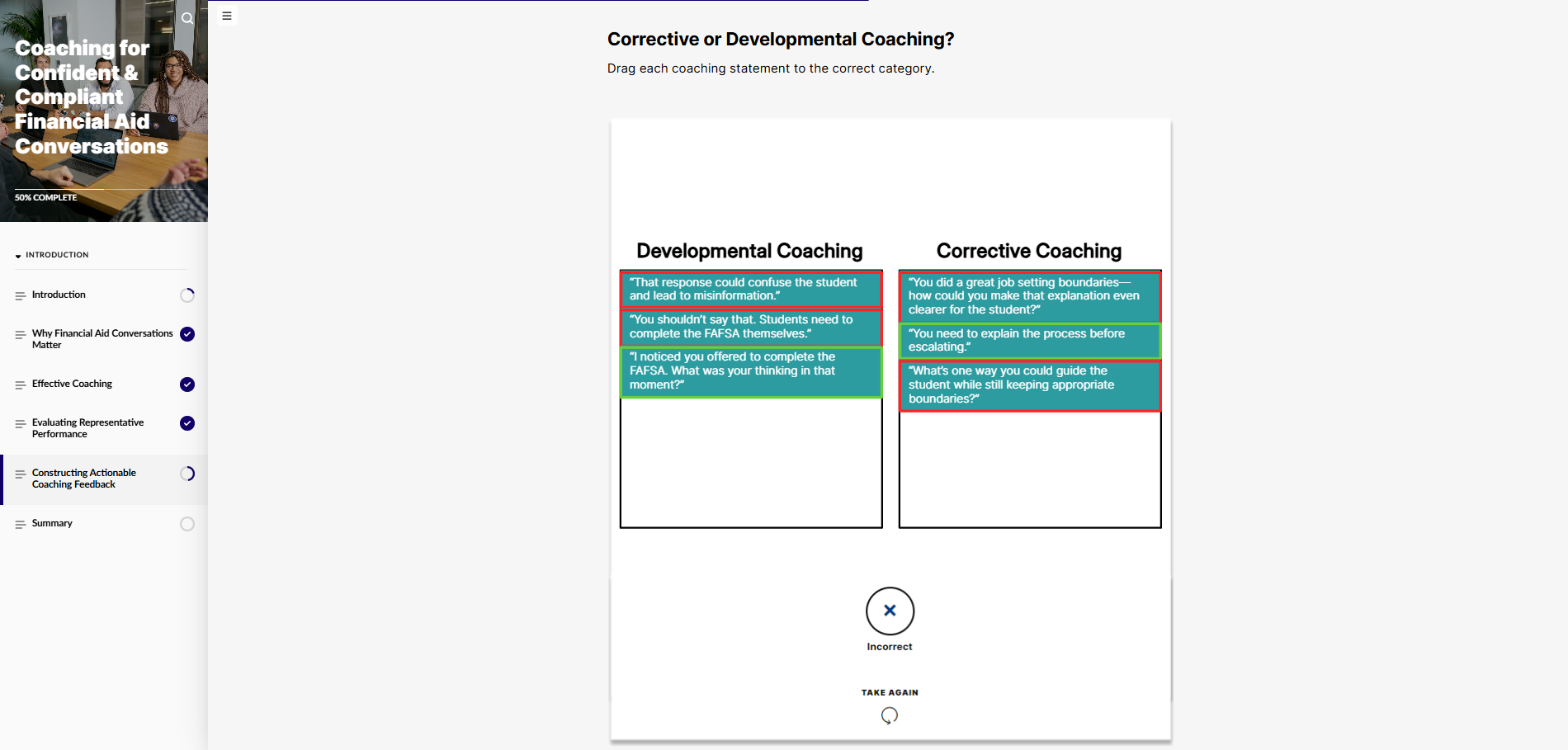
Evaluating Representative Performance: Focuses on analyzing representative responses and identifying opportunities for developmental or corrective coaching. Learners engage with realistic scenarios, evaluate coaching effectiveness, and practice applying coaching standards consistently.
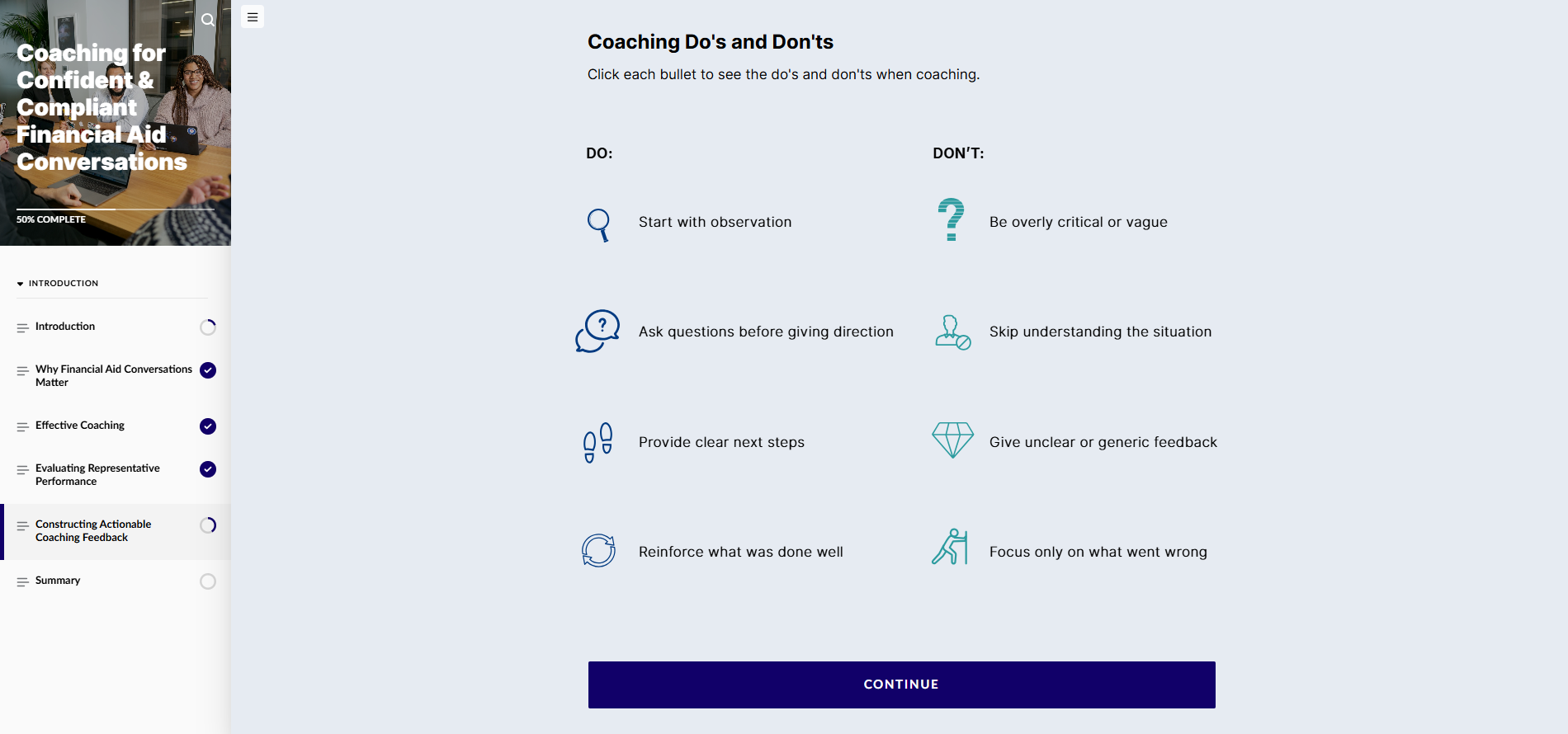
Constructing Actionable Coaching Feedback: Concludes with learner-generated coaching responses, advanced scenario practice, and applied coaching exercises. Learners differentiate between coaching approaches, construct actionable feedback statements, and practice transferring learning into authentic workplace situations.
Instructional Design Highlights
Designed a blended Rise and Storyline learning experience featuring interactive scenario-based activities, sorting interactions, click-to-reveal elements, and guided practice exercises.
Developed custom Storyline interactions to simulate realistic coaching situations and reinforce learner decision-making in real-world contexts.
Created multiple scenario-based coaching activities aligned directly to performance objectives and workplace application.
Incorporated downloadable job aids, conversation cards, and a leadership guide to reinforce transfer of learning beyond the module itself.
Applied adult learning principles by grounding instruction in authentic workplace challenges and practical coaching situations.
Structured content using progressive complexity, moving learners from recognition and understanding to application, evaluation, and creation.
Designed assessments and knowledge checks aligned directly to measurable learning objectives and coaching performance outcomes.
Integrated accessibility and usability considerations through consistent navigation, chunked content, visual hierarchy, and clear instructional flow.
Reflection
This capstone project challenged me to approach instructional design from a full project lifecycle perspective, including analysis, design, development, implementation, and evaluation. Since I already work professionally as an instructional designer, this project allowed me to merge academic instructional design theory with authentic workplace practices and organizational training strategies.
One of the most valuable aspects of this project was designing highly interactive Storyline activities that reinforced practical coaching application rather than passive content consumption. I intentionally focused on creating realistic coaching scenarios that reflected the complexity and nuance of real enrollment conversations, while also ensuring that each interaction aligned directly to a measurable learning objective.
This project also strengthened my understanding of implementation planning, learner evaluation, and iterative instructional improvement. Through pilot implementation feedback and evaluation analysis, I gained deeper insight into how instructional solutions can evolve over time based on learner performance, engagement data, and workplace applicability.
Ultimately, this capstone reflects my instructional design philosophy: creating learning experiences that are practical, engaging, strategically aligned, and directly transferable to real workplace performance.
See samples of the completed course below!